


Dry laundry fast, save money
The Meaco way

At Meaco, we’ve spent over 30 years mastering indoor air treatment, so we know a thing or two about moisture. Chris Michael, our founder and CEO, has been perfecting solutions for homes like yours for decades — and when it comes to drying laundry, he has a simple message: there’s a smarter, faster, and gentler way.
“Indoor laundry doesn’t need to be a compromise. With the right setup, you can dry your clothes quickly, cheaply, and safely.”
Chris Michael (CEO & Founder of Meaco)

At Meaco, we’ve spent over 30 years mastering indoor air treatment, so we know a thing or two about moisture. Chris Michael, our founder and CEO, has been perfecting solutions for homes like yours for decades — and when it comes to drying laundry, he has a simple message: there’s a smarter, faster, and gentler way.
“Indoor laundry doesn’t need to be a compromise. With the right setup, you can dry your clothes quickly, cheaply, and safely.”
Chris Michael (CEO & Founder of Meaco)
Why indoor laundry can be a nightmare
Laundry. It’s a chore nobody loves. Wet washing leaves rooms damp, stuffy, or even musty. Tumble dryers are a solution to indoor laundry but they’re expensive, noisy, and hard on fabrics.
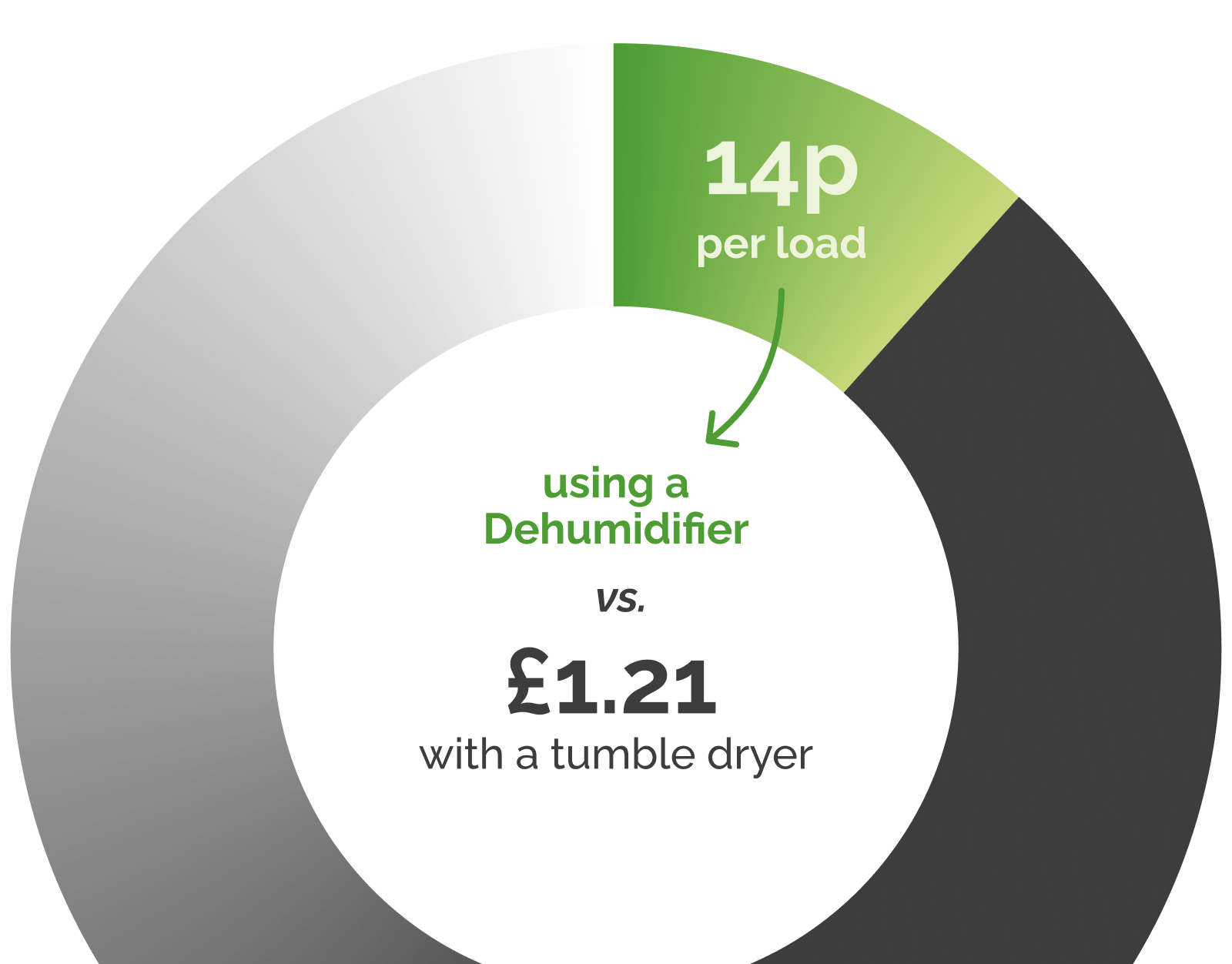
Ever since energy prices spiked in 2022, many people have worried about the cost of running electrical appliances, particularly those that consume a lot of power. Tumble dryers are among the most energy-hungry appliances in the home, with each load of washing costing between £1.20 and £1.80 to dry. Many households have limited access to outdoor drying, and even those that do are pushed indoors during the wet, dark winter months. Over time, drying clothes inside can quietly add a considerable cost to annual household bills.
For instance, a family using a tumble dryer daily would spend between £420–£630 per year on drying laundry alone. This can put a considerable strain on a family’s finances. Even now, energy prices are still significantly higher than they were in 2021 and with the cost-of-living crisis, rising utility, council tax bills and food inflation, everyone is looking for a way to save money.
Unfortunately, we can see that many people just do not understand the full picture and therefore the information that is being given to consumers is confusing, and in many cases, incorrect.
Our founder and CEO, Chris Michael, has carried out his own tests to provide a definitive guide on how to dry your laundry quickly and cheaply, whilst also protecting your home and your health.
Our tests show you can dry laundry for as little as...
Why indoor laundry can be a nightmare
Laundry. It’s a chore nobody loves. Wet washing leaves rooms damp, stuffy, or even musty. Tumble dryers are a solution to indoor laundry but they’re expensive, noisy, and hard on fabrics.
Ever since energy prices spiked in 2022, many people have worried about the cost of running electrical appliances, particularly those that consume a lot of power. Tumble dryers are among the most energy-hungry appliances in the home, with each load of washing costing between £1.20 and £1.80 to dry. Many households have limited access to outdoor drying, and even those that do are pushed indoors during the wet, dark winter months. Over time, drying clothes inside can quietly add a considerable cost to annual household bills.
For instance, a family using a tumble dryer daily would spend between £420–£630 per year on drying laundry alone. This can put a considerable strain on a family’s finances. Even now, energy prices are still significantly higher than they were in 2021 and with the cost-of-living crisis, rising utility, council tax bills and food inflation, everyone is looking for a way to save money.
Unfortunately, we can see that many people just do not understand the full picture and therefore the information that is being given to consumers is confusing, and in many cases, incorrect.
Our founder and CEO, Chris Michael, has carried out his own tests to provide a definitive guide on how to dry your laundry quickly and cheaply, whilst also protecting your home and your health.
Our tests show you can dry laundry for as little as...
Here’s the secret: controlled dry air + airflow = faster drying.
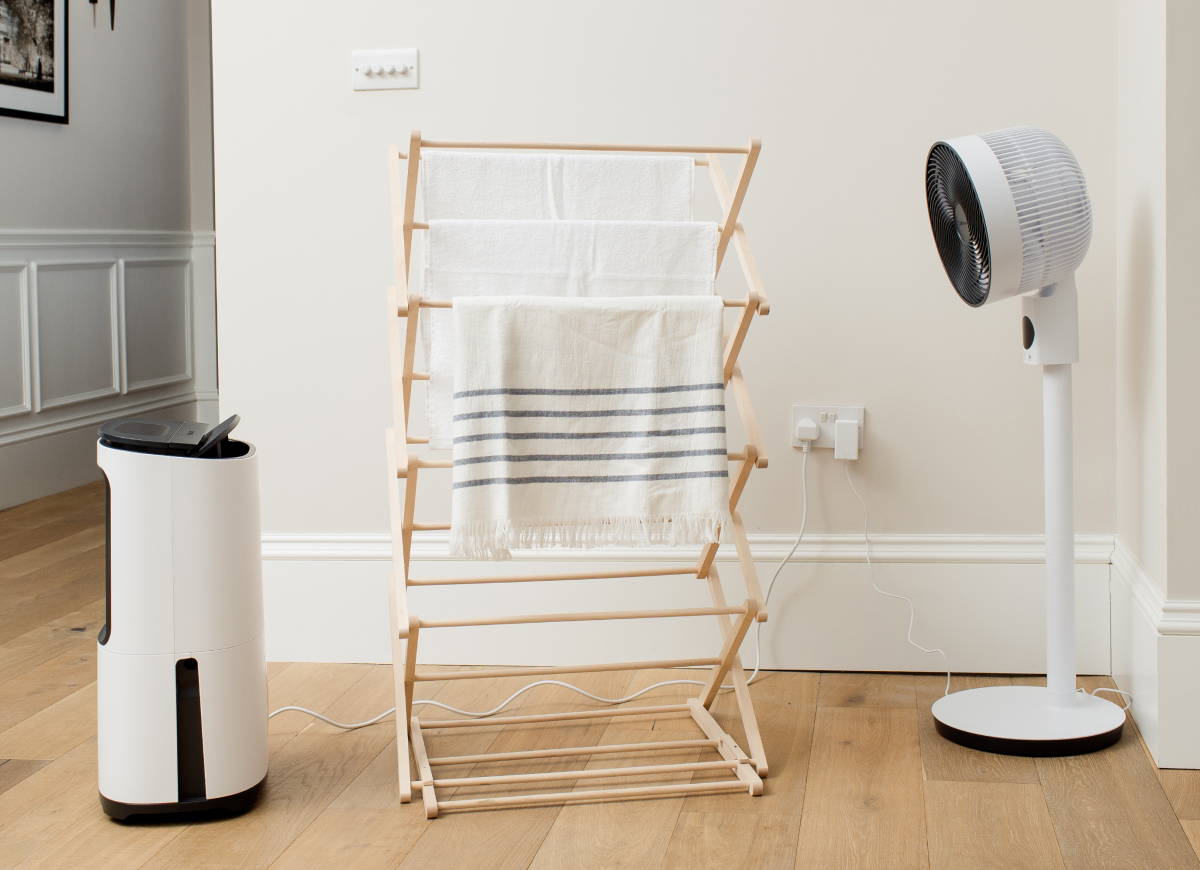
A dehumidifier removes moisture from both the air and the clothes themselves. Pair it with a fan, and you’re effectively creating a mini “dry, breezy day” indoors – all year round. We often talk about recreating the perfect summer’s day to dry washing indoors and the evidence from our experiment supports just that!
“Think of it as indoor wind for your laundry. Dry air from a dehumidifier and airflow from a fan – it’s simple, smart, and it works.” – Chris Michael
The result? A full load of laundry dry in as little as 1 hour 40 minutes when optimised with a fan, at a fraction of the cost of a tumble dryer, and without leaving your home feeling damp.
Here’s the secret: controlled dry air + airflow = faster drying.
A dehumidifier removes moisture from both the air and the clothes themselves. Pair it with a fan, and you’re effectively creating a mini “dry, breezy day” indoors – all year round. We often talk about recreating the perfect summer’s day to dry washing indoors and the evidence from our experiment supports just that!
“Think of it as indoor wind for your laundry. Dry air from a dehumidifier and airflow from a fan – it’s simple, smart, and it works.” – Chris Michael
The result? A full load of laundry dry in as little as 1 hour 40 minutes when optimised with a fan, at a fraction of the cost of a tumble dryer, and without leaving your home feeling damp.
Chris and the Meaco team tested multiple setups to find the ultimate indoor drying solution:
Maximise on the spin cycle from your washing machine
Start strong. The higher the spin in the washer, the less water remains and the faster the drying.
Space out clothes
Small items on the bottom, larger items on top, with gaps between garments for airflow. Crowding slows drying and increases humidity.
Dehumidifier placement
Place a dehumidifier near the rack, aiming airflow across the clothes rather into a wall or corner. This will recreate your “dry” element to the summer’s day.
Add a fan
Position a fan opposite the dehumidifier so air flows across the clothes, dramatically speeding up evaporation. Here is your “breezy” element to a summer’s day.
Keep the room closed
Closed doors and windows mean your dehumidifier works efficiently, without outside humidity slowing things down.
To see how everything worked in practice, we designed a controlled test environment. The setup for these tests was as follows:
For each test, we used the same 13 t-shirts and put them through the same rinse and spin cycle in the same Samsung washing machine.
The shirts were then hung on the same clothes horse, in the same utility room and a note taken of the starting temperature and relative humidity. These are not laboratory conditions, but because consistency matters, we kept the starting conditions constant each time and reported any changes.
Five different tests were carried out and filmed (see right).
One other test was carried out, but not filmed, whereby a second load went through the natural drying test using the higher relative humidity generated by the first natural drying test to demonstrate how natural drying times increase the more often you do and how they generate high relative humidities that can cause damp, condensation and mould issues in the room.

Acting as our control variable, Chris started with natural drying of the t-shirts with no mechanical help (no dehumidifier, no fan, no extra heat in the room, no extractor fan)

Drying using just a MeacoDry Arete® One 20L Dehumidifier

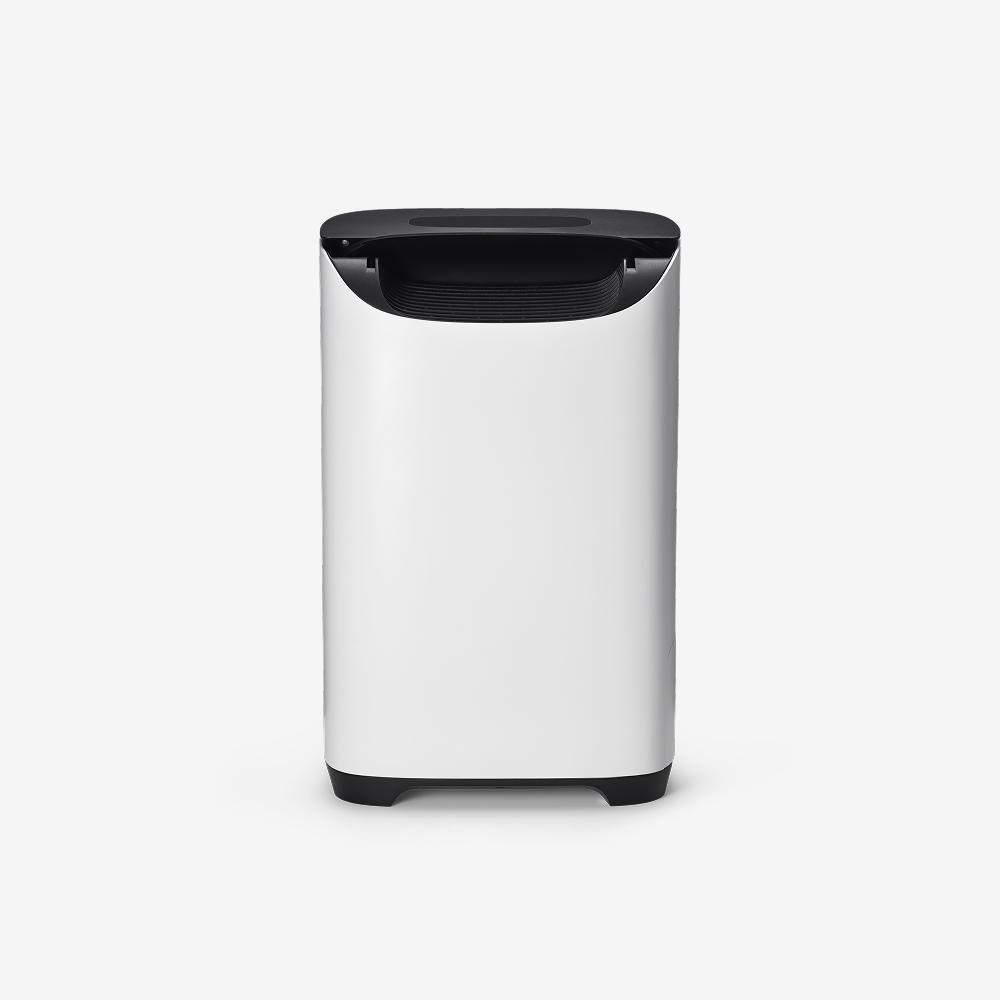
Drying using just a Meaco DD8L Pro Desiccant Dehumidifier
Drying using just a MeacoDry Arete® One 20L Dehumidifier and a Meaco Sefte® Pedestal Fan

Drying using just a Meaco DD8L Pro Desiccant Dehumidifier and a Meaco Sefte® Pedestal Fan
For each test we measured:
The starting temperature and relative humidity using a calibrated thermohygrometer accurate to +/-1.5%rh
The finishing temperature and relative humidity
The time taken to dry the clothes
The approximate electricity cost of the test based on 26.35p/kWh
From this we have been able to determine:
Which method is the fastest way to dry your laundry
Which method is the cheapest
How much time each technique saves
How much a family could save across the year
These videos show the test setup, the room, the clothes horse positioning, and how airflow and dehumidifiers work together in real time.
For more insights, visit our YouTube channel.
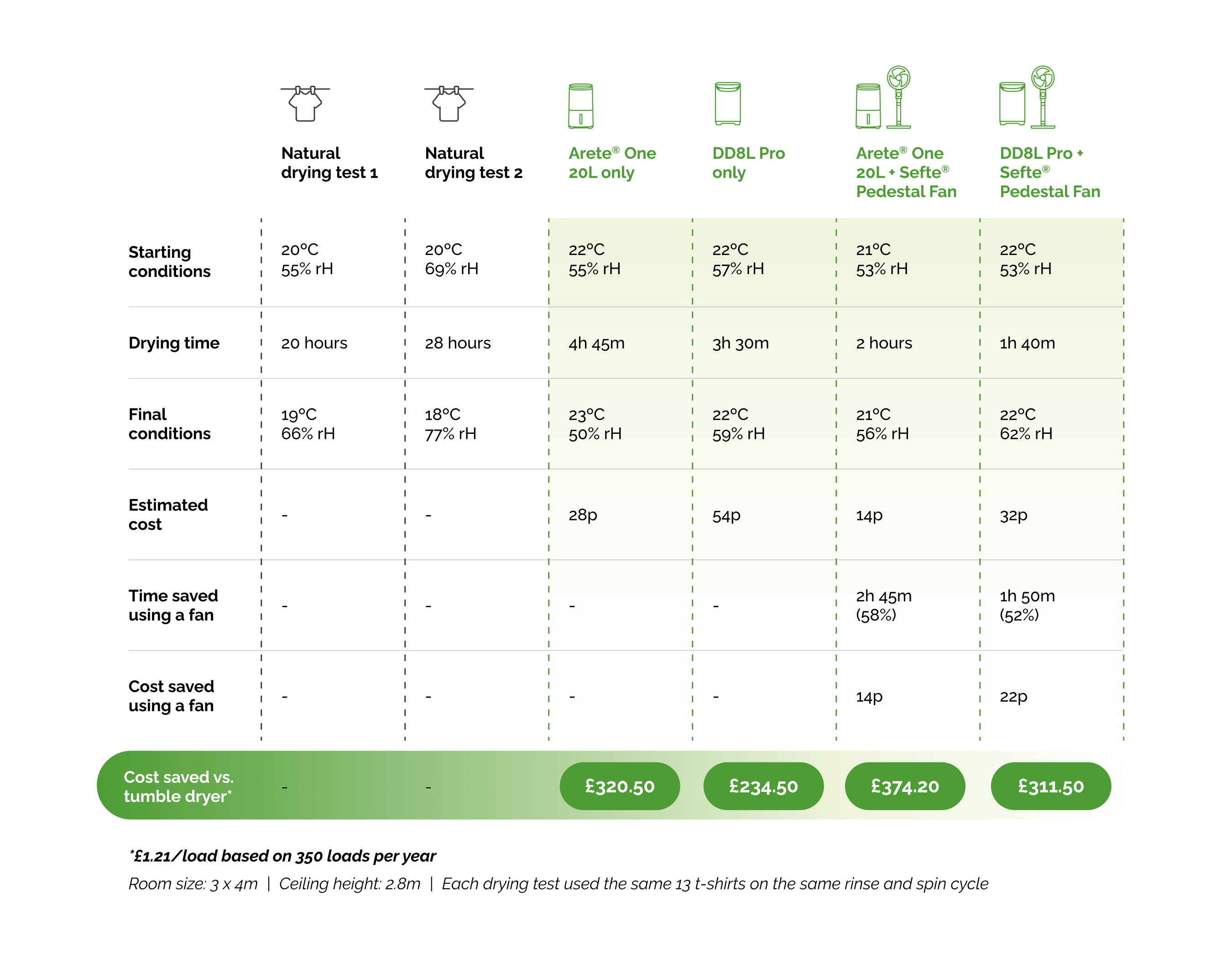
Winner: Fastest way to dry your laundry
Based on this controlled test, the fastest way to dry your laundry is using a combination of the Meaco DD8L Pro desiccant dehumidifier and the Meaco Sefte® Pedestal fan.
The drying time was just 1h 40 with the addition of the fan reducing the drying time by 2h 45, a massive 58%.
The cost of drying the load was 32p.
Saving £311.50 a year compared to a tumble dryer.
Winner: Cheapest way to dry your laundry
Based on this controlled test, the fastest way to dry your laundry is using a combination of the Meaco Arete® One 20L compressor dehumidifier and the Meaco Sefte® Pedestal fan.
The drying time was just under 2 hours with the addition of the fan reducing the drying time by 1h 50, a massive 52%.
The cost of drying the load was 14p.
Saving £374.20 a year compared to a tumble dryer.
“The secret weapon is the Sefte® Pedestal Fan – it really is a game-changer.” – Chris Michael
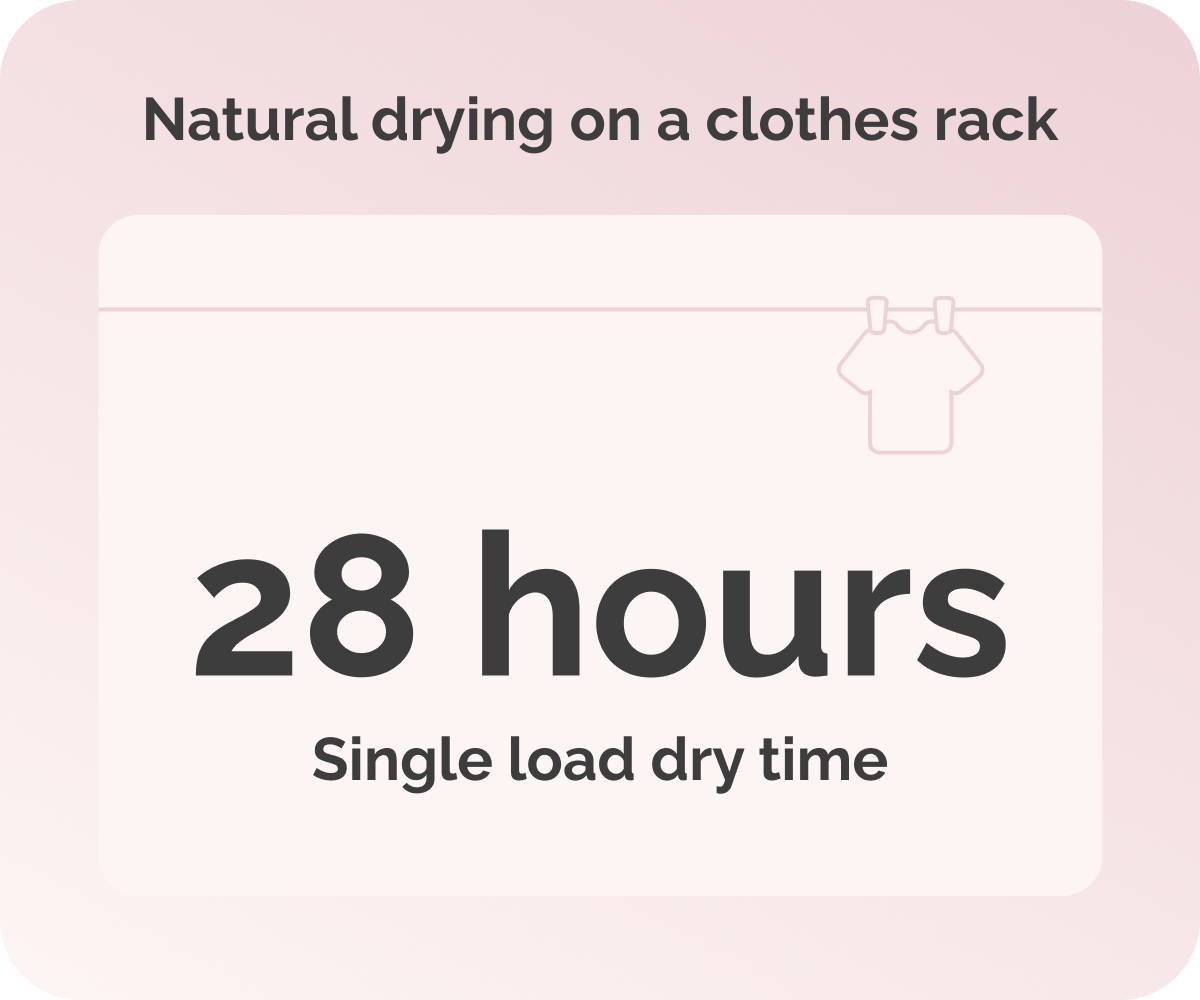
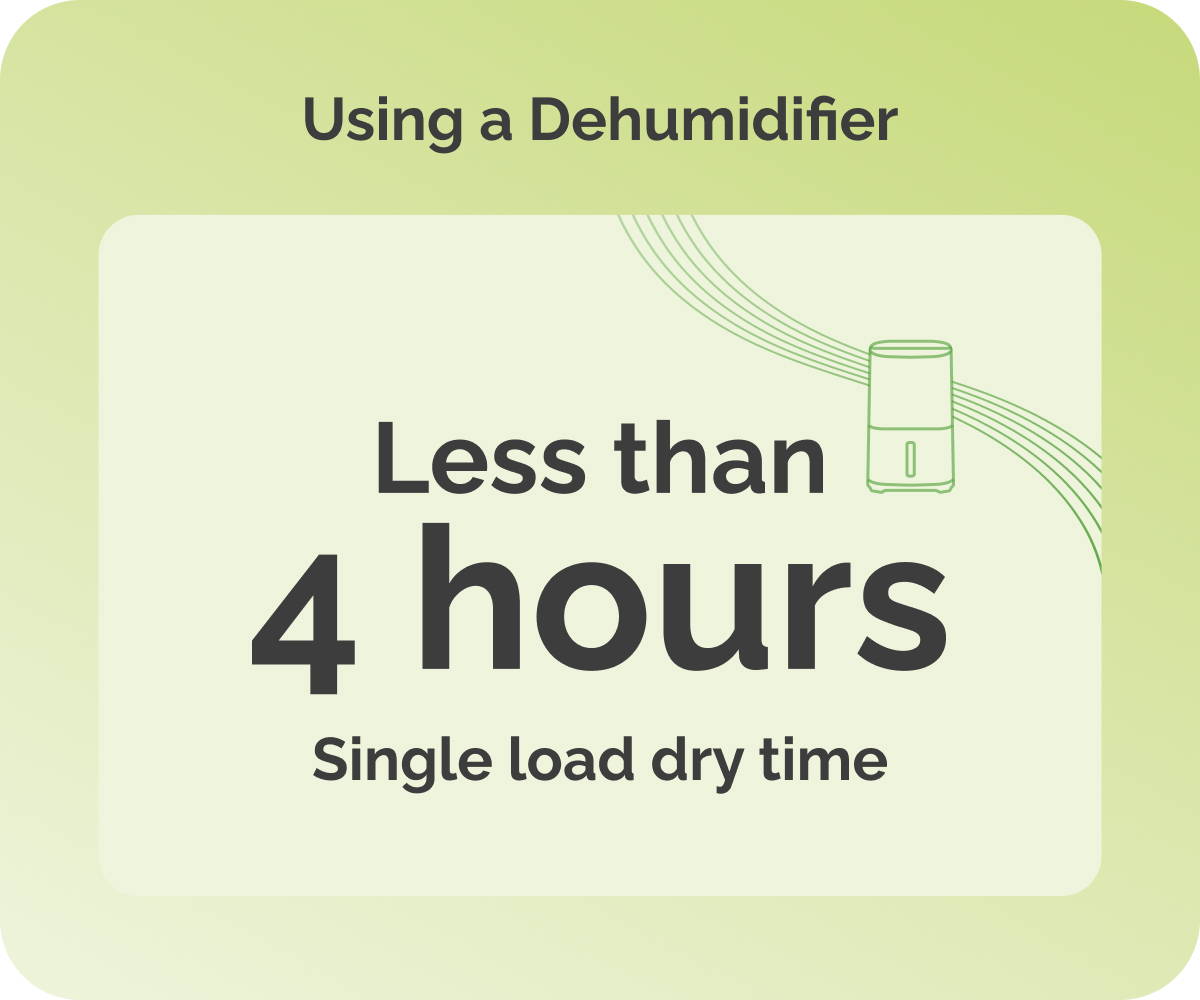
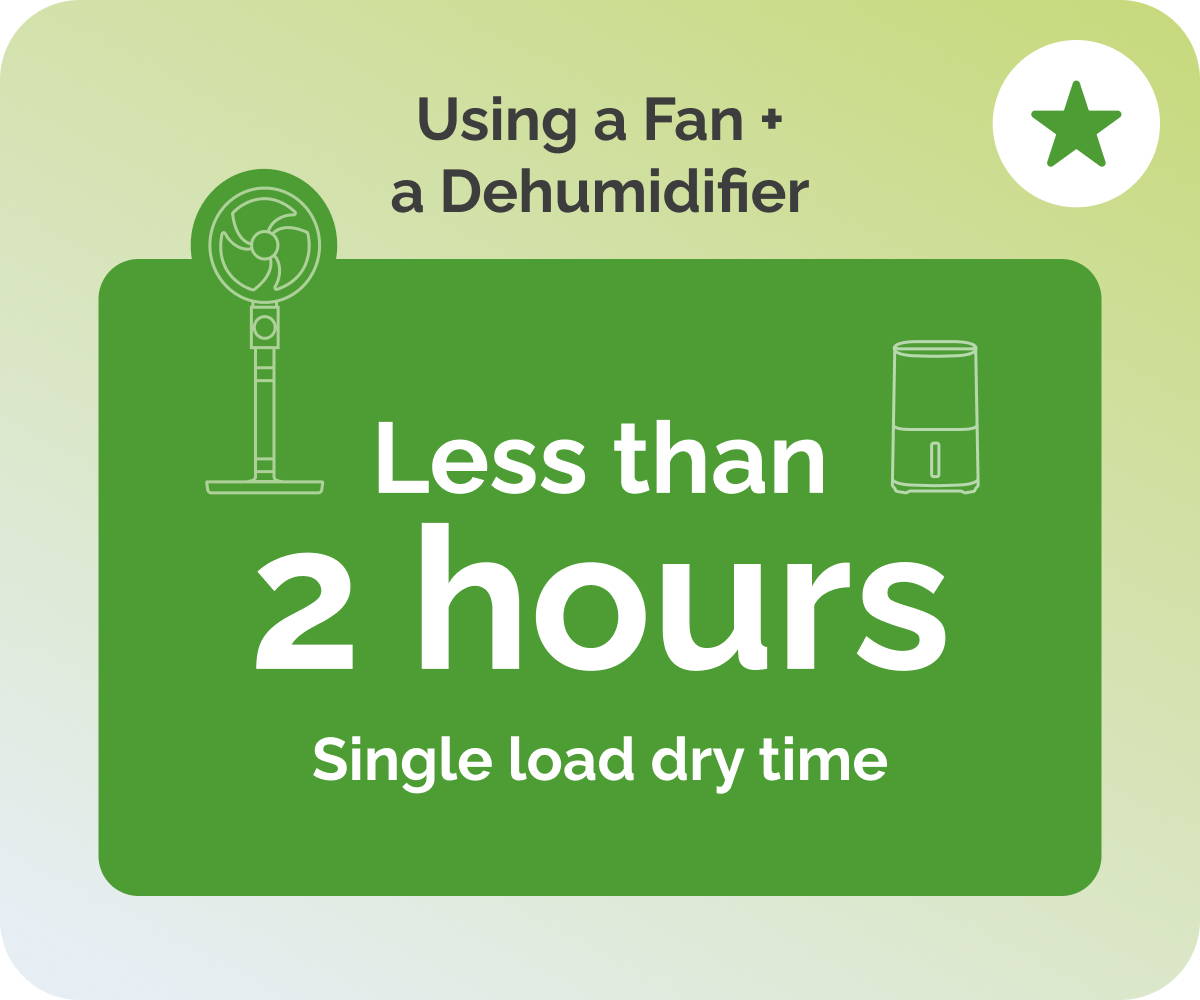
Natural indoor drying simply doesn’t compare. It drives up humidity, encourages mould, increases heating costs, and can even leave clothes smelling musty.
The data is clear: combining a Meaco dehumidifier with a fan saves time, money, and protects your home.

Winner: Fastest way to dry your laundry
Based on this controlled test, the fastest way to dry your laundry is using a combination of the Meaco DD8L Pro desiccant dehumidifier and the Meaco Sefte® Pedestal fan.
The drying time was just 1h 40 with the addition of the fan reducing the drying time by 2h 45, a massive 58%.
The cost of drying the load was 32p.
Saving £311.50 a year compared to a tumble dryer.
Winner: Cheapest way to dry your laundry
Based on this controlled test, the fastest way to dry your laundry is using a combination of the Meaco Arete® One 20L compressor dehumidifier and the Meaco Sefte® Pedestal fan.
The drying time was just under 2 hours with the addition of the fan reducing the drying time by 1h 50, a massive 52%.
The cost of drying the load was 14p.
Saving £374.20 a year compared to a tumble dryer.
“The secret weapon is the Sefte® Pedestal Fan – it really is a game-changer.” – Chris Michael
Natural indoor drying simply doesn’t compare. It drives up humidity, encourages mould, increases heating costs, and can even leave clothes smelling musty.
The data is clear: combining a Meaco dehumidifier with a fan saves time, money, and protects your home.
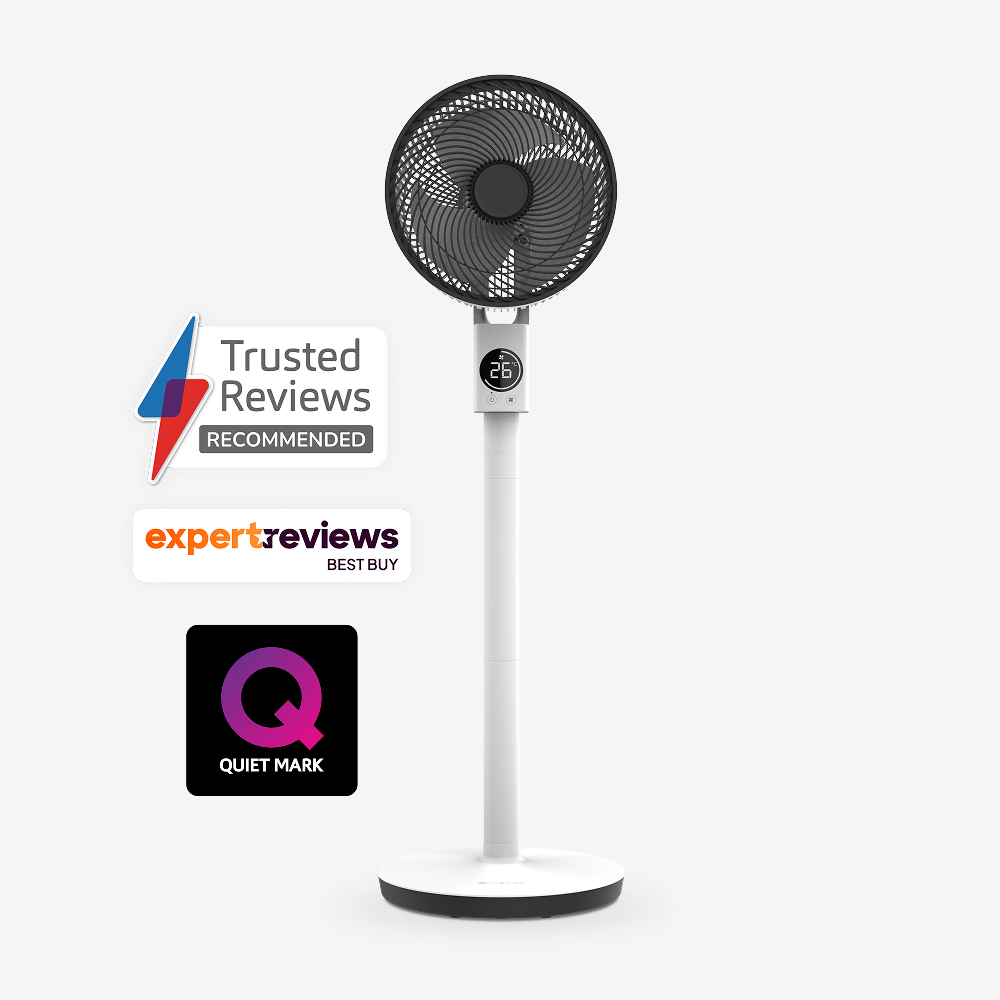
MeacoFan Sefte® Pedestal
12 powerful fan speeds
Whisper-quiet from 24dB
Brushless DC Fan motor
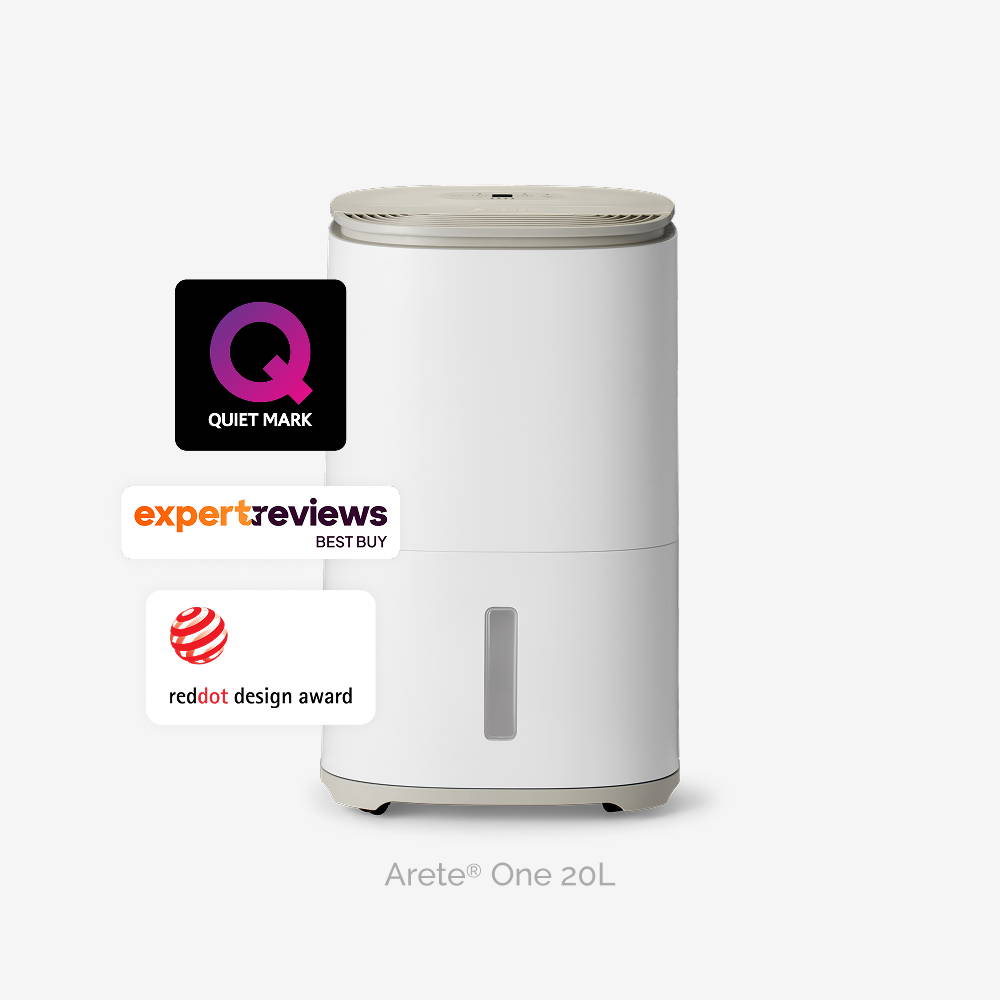
MeacoDry Arete® One
Advanced Laundry Mode
Medical-grade H13 HEPA filter
Five-year warranty


